Blog
Electric Chain Hoist — Buyer’s Guide & Sizing Fundamentals (GCC)

TL;DR — Key decisions at a glance
Size to max load + rigging weight, then select next WLL above that total. Choose duty class ISO M4–M6 by starts/hour — and derate one class for GCC sites exceeding 40°C ambient. Specify IP54 minimum for dust; IP55/65 for coastal environments. Grade 80 chain (EN 818-7) is standard. Verify FEM 1.001 or ASME B30.16 compliance before procurement. For pendant vs radio vs VFD, match to your positioning precision needs. On this page
- What is an electric chain hoist?
- Selection & sizing — step by step
- Duty class derating table for GCC temperatures
- Specs, chain grade & protection
- Compliance standards (FEM, ISO, ASME)
- Installation checklist
- Maintenance schedule
- Safety rules
- Applications across industries
- GCC availability — UAE, Saudi, Oman, Qatar, Kuwait, Bahrain
- Why choose Lift Easy?
- Product comparison
- Frequently asked questions
- Related products
An electric chain hoist is the fastest way to increase throughput and reduce operator strain in any industrial lifting operation. Choosing the right unit — matched to your load, duty cycle, and environment — is what separates a reliable long-term asset from an underperforming liability.
This guide is written for GCC-based engineers, procurement managers, and plant operators. It covers every variable that matters: duty class selection, ambient temperature derating, IP rating for GCC dust and heat, chain grade, compliance standards, and installation-to-certification workflow. Lifteasy Manufacturing Co. Ltd supplies, installs, and certifies electric chain hoists across the UAE, Saudi Arabia, Oman, Qatar, Kuwait, and Bahrain.
What is an electric chain hoist?
An electric chain hoist uses a motor and hardened-gear gearbox to drive a Grade 80 load chain over a lift wheel, raising or lowering a load via a bottom hook block. Compared with manual Chain Blocks and Lever Blocks, it delivers faster cycle times, consistent controlled speed, and far lower operator fatigue — critical advantages in GCC industrial environments where manual lifting in high ambient temperatures carries significant ergonomic and safety risk.
The Lift Easy range covers 1T to 10T working load limit (WLL), paired with a choice of fixed suspension, push/geared trolley, or electric trolley for beam travel. Control options include low-voltage pendant, radio remote, and variable-frequency drive (VFD) for stepless speed control.
Electric Chain Hoist — View ProductBeam ClampChain SlingsLifting Equipment Complete Guide ↗
Selection & sizing — step by step
Use this eight-step process to reach a complete specification before requesting a quotation.
- Calculate total lifted load. Add the mass of your load to the weight of all rigging — slings, spreader bars, beam clamps, and the hook block. Select a WLL at or above this total. Never size to the bare load alone.
- Determine duty class. Estimate your starts per hour and daily operating hours (see derating table below). GCC sites operating above 40°C must derate by one duty class.
- Confirm lift height and falls. For lifts over 6 m or loads above 5T, consider a dual-fall chain reeving configuration to halve chain speed and increase precision.
- Select lifting speed and control type. Single-speed for simple lifts; dual-speed or VFD for precise positioning, tooling, or assembly work where load swing must be minimised.
- Choose trolley and beam configuration. Verify the beam flange width against your trolley’s wheel spacing range. Use a Beam Clamp for fixed-point suspension from a structural member without trolley travel.
- Specify IP rating and finish. Standard GCC industrial: IP54. Coastal or wash-down: IP55–IP65. Offshore, cement, or chemical environments: hot-dip galvanised chain and corrosion-resistant enclosure finish.
- Confirm power supply. GCC standard is 380–415V, 50Hz, 3-phase. Verify motor protection relay and e-stop circuit ratings match your site’s supply and isolation requirements.
- Plan compliance and certification. Identify which standard applies (FEM 1.001, ISO 4301, ASME B30.16, EN 14492-2). Budget for proof-load test at 125% WLL and third-party certification before commissioning.
Duty class derating table for GCC temperatures Critical for GCC
Why this matters: FEM 1.001 and ISO 4301 duty class ratings are specified for a maximum ambient temperature of 40°C. GCC industrial sites regularly reach 45–55°C in summer months. Operating a hoist above its rated ambient without derating accelerates motor insulation degradation, reduces brake service life, and may void warranty and certification. Always confirm the hoist’s rated ambient range with your supplier before commissioning.
| Site ambient temp (°C) | Installed duty class | Effective duty class at temperature | Action required |
|---|---|---|---|
| Up to 40°C | M4 / M5 / M6 | M4 / M5 / M6 | No derating — standard spec applies |
| 40°C – 45°C | M5 / M6 | M4 / M5 effective | Upsize by one duty class or reduce operating cycles |
| 45°C – 50°C | Any | Derate by one full class | Specify Class H motor insulation as minimum. Confirm with manufacturer. |
| Above 50°C | Any | Derate by two classes | Mandatory engineer review. Forced-cooling or tropical-duty motor may be required. |
ISO M-class quick reference — starts per hour
| ISO / FEM Class | Max starts/hour | Typical daily use | Typical GCC application |
|---|---|---|---|
| M3 (FEM 1m) | Up to 30 | Light occasional use | Maintenance, infrequent lifts |
| M4 (FEM 1Am) | Up to 60 | Moderate — up to 4 hrs/day | Workshop MRO, general industry |
| M5 (FEM 2m) | Up to 120 | Regular — 4–8 hrs/day | Manufacturing, warehousing (GCC standard spec) |
| M6 (FEM 3m) | Up to 200 | Intensive — full shift | Steel yards, high-cycle production lines |
| M7 (FEM 4m) | Up to 300 | Very heavy — multi-shift | Foundries, heavy fabrication (use wire rope hoist) |
Highlighted rows represent the most common GCC specifications. Above M6, consider an Electric Wire Rope Hoist for better heat management and service life.
Specifications, chain grade & protection options
Core specification range
| Parameter | Specification |
|---|---|
| Capacity (WLL) | 1T, 2T, 3T, 5T, 10T (custom on request) |
| Load chain grade | Grade 80 per EN 818-7. Discard at >2% elongation over 11-link gauge. |
| Motor insulation class | Class F (155°C) standard; Class H (180°C) recommended for GCC sites >45°C ambient |
| Power supply | 380–415V, 50Hz, 3-phase (alternatives available) |
| Control voltage | 24V or 48V low-voltage pendant (standard); radio remote optional |
| Duty class | ISO M4–M6 (FEM 1Am–3m) — confirm with derating table for GCC ambient |
| Enclosure rating | IP54 standard; IP55/IP65 for coastal and wash-down environments |
Safety devices (standard fit)
| Device | Function | GCC notes |
|---|---|---|
| Mechanical overload clutch | Slips at 110–125% WLL to prevent structural overload | Essential — prevents bridge beam overload on GCC sites with variable rigging |
| Upper limit switch | Cuts power before hook block contacts body | Must be tested after every installation or adjustment |
| Lower limit switch | Prevents chain over-travel and payout | Set with minimum 2 dead wraps on chain wheel |
| Electromagnetic brake | Spring-applied, electrically released — holds load on power failure | Inspect brake pad wear quarterly; GCC heat accelerates wear |
| Motor thermal overtemperature protection | Cuts power if motor winding temperature exceeds rated limit | Critical in GCC — do not bypass or override |
| Emergency stop (e-stop) | Cuts all motion immediately | E-stop circuit and relay must be rated for site supply voltage |
Control options
| Control type | Best for | GCC advantage |
|---|---|---|
| Low-voltage pendant | Standard industrial lifting, simple positioning | Robust, no battery maintenance, no RF licensing required |
| Radio remote control | Restricted-access bays, high heat areas, wide travel | Operator can stand away from hot zones — significant safety advantage in GCC summer |
| VFD variable-speed drive | Precision positioning, jig work, assembly | Eliminates load swing; stepless speed reduces wear at high ambient temperatures |
Compliance standards applicable in GCC
Procurement note: GCC project specifications vary. Confirm which standard your client or EPC contractor requires before placing an order. Lift Easy can supply documentation and third-party certification to any of the standards below.
| Standard | Scope | Where commonly required |
|---|---|---|
| FEM 1.001 | European hoist design, duty classification (FEM 1m–4m = ISO M3–M7) | UAE, Saudi, most GCC EPC projects |
| ISO 4301 | Crane and hoist duty classification basis | International and GCC technical specs |
| EN 14492-2 | Safety requirements for electric hoists | CE-marked equipment in UAE and MENA |
| EN 818-7 | Short-link chain for hoists — Grade 80/100 specification | Chain certification and traceability |
| ASME B30.16 | US standard for overhead hoists — often cited on US-operated GCC sites | Oil & gas, petrochemical (US-company-operated sites) |
| Proof load test | Static test at 125% of WLL before commissioning | Required by virtually all GCC project specifications |
Installation checklist
- Verify beam structural rating. The beam must be rated to carry the hoist self-weight + WLL + dynamic factors (typically 1.3× static load). Confirm flange dimensions match trolley wheel spacing before any works proceed.
- Set exclusion zones. Define and mark a ground-level exclusion zone equal to the maximum swing radius of the load before lifting begins. Post signage and barrier.
- Mount clamp or trolley. Torque all fasteners to manufacturer specification. Adjust wheel spacing with feeler gauge — there must be no lateral play on the flange.
- Hang hoist and connect power. Run cable per local electrical code. Verify earth continuity. Connect control circuit at rated voltage. Label isolator clearly.
- Program VFD (if fitted). Set acceleration/deceleration ramps. Configure motor thermal protection parameters for actual ambient temperature.
- Test all safety devices. Verify upper and lower limit switch activation before any load is applied. Test e-stop under power. Verify electromagnetic brake holds with rated load.
- Proof-load test at 125% WLL. Static hold for minimum 10 minutes. Record all measurements and observations in test documentation. Retain certificate on-site for inspection.
- Conduct operator familiarisation. Demonstrate all controls, e-stop, and emergency procedures. Log names and date of all trained operators.
Maintenance schedule
GCC maintenance note: High ambient temperatures, dust, and salt air in coastal locations accelerate wear on chain, brake pads, and motor insulation. Increase inspection frequency in environments above 45°C or in high-dust/coastal conditions. All inspection findings must be logged in a site-based maintenance register.
| Interval | Task | Action / acceptance criteria |
|---|---|---|
| Daily (pre-shift) | Visual inspection of chain, hook, pendant, and enclosure | Remove from service if: chain is twisted, kinked, or visibly worn; hook shows deformation or gate damage; pendant cable is frayed or connector loose. Log in shift register. |
| Weekly | Functional test of all limit switches and e-stop; brake test under rated load | Limit switches must cut power within 50mm of travel limit. Brake must hold 100% WLL with motor de-energised. Any failure → remove from service immediately. |
| Monthly | Chain elongation check; lubrication | Measure chain over 11 links using calibrated gauge. Discard chain if elongation exceeds 2% of original gauge length (EN 818-7). Lubricate with high-temperature mineral chain oil suitable for GCC ambient — do not use standard grease. |
| Quarterly | Fastener torque check; trolley wheel inspection; brake pad wear measurement; motor terminal inspection | Re-torque all structural fasteners. Replace trolley wheels if tread wear exceeds 10%. Measure brake pad thickness — replace at manufacturer-specified minimum. Check for motor terminal corrosion (especially in coastal GCC locations). |
| Annually | Full third-party inspection and recertification; proof-load retest | Inspecting body must be independent of the owner. Retain original and re-certification documents on-site for audit. Most GCC projects require annual recertification as a minimum. |
Safety rules
- Never exceed WLL. Verify the total lifted weight including all rigging before each lift. Post the hoist’s WLL visibly at the operating position.
- Keep loads centred. Side-loading a chain hoist severely reduces effective WLL and accelerates chain and gearbox wear. Never use a hoist to drag or pull loads horizontally.
- Use only rated rigging accessories. Connect loads with Chain Slings, rated shackles, and certified lifting points. Improvised rigging is the leading cause of hoist-related incidents.
- Test limits after every adjustment or maintenance event. A limit switch incorrectly re-set is a hidden hazard. This test must be logged.
- Maintain competency records. In the GCC, many project HSE frameworks require documented operator competency. Keep training certificates and daily sign-off logs available for inspection.
- Never operate with a defective brake, limit switch, or overload device. These are primary barriers to a dropped-load event. Any defective safety device = immediate withdrawal from service.
Applications across GCC industries
| Industry / application | Typical use | Recommended accessories |
|---|---|---|
| Manufacturing & fabrication | Jig positioning, workstation component handling, press loading | VFD control for precision; Beam Clamp |
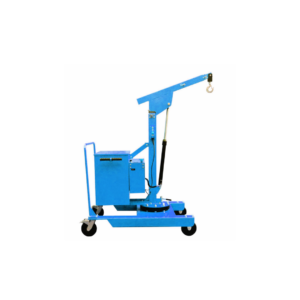
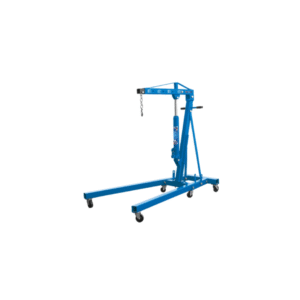
| MRO — Maintenance, Repair & Overhaul | Pump, gearbox, motor changeouts in confined bays | Shop Crane for mobile access |
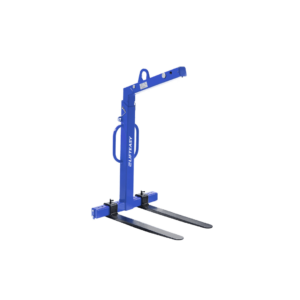
| Warehousing & logistics | Pallet handling, container unloading, racking replenishment | Crane Fork for pallet handling |
| Steel yards & plate processing | Heavy plate and section lifting, material staging | Vertical Lifting Clamps, Horizontal Clamps |
| Oil & gas — onshore facilities | Pressure vessel handling, pipe spool lifting, valve changeouts | ASME B30.16 certification required; radio remote for hazardous zone standoff |
| Construction — precast & fit-out | Structural member placement, MEP equipment installation | Chain Slings, rated shackles |
GCC availability — supply, installation & certification
Lifteasy Manufacturing Co. Ltd operates a full turnkey service across all six GCC countries: supply, engineering support, installation, proof-load testing, third-party certification, and operator familiarisation. For channel procurement, our distributor network holds stock of the most common capacities (1T, 2T, 3T, 5T) for immediate delivery.
UAE — Comprehensive coverage
Full installation and certification service available in all emirates. Site-specific IP rating and derating advisory included with every order.
DubaiAbu DhabiSharjahAjmanRas Al KhaimahAl AinFujairah
GCC — Regional supply and certification
Delivery, installation, proof-load testing, and third-party certification available across Saudi Arabia (Riyadh, Jeddah, Dammam), Oman (Muscat, Sohar), Qatar (Doha), Kuwait, and Bahrain. For coastal sites in Bahrain and Kuwait, request corrosion-resistant specification at time of enquiry.
Why choose Lift Easy?
GCC-specific engineeringDuty class derating, motor insulation class selection, and IP rating guidance for GCC ambient conditions — not generic catalogue specs.
Full certification supportProof-load testing to 125% WLL, FEM/ISO/ASME documentation, and third-party inspection coordination included in our turnkey service.
Grade 80 chain standardEN 818-7 Grade 80 load chain on all units, with full batch traceability documentation available for audit.
Regional stock & fast deliveryCommon capacities (1T–5T) held in GCC distribution stock. Emergency supply available for unplanned downtime events.
Operator training includedOn-site operator familiarisation and competency documentation provided — meeting GCC project HSE requirements.
Post-installation supportScheduled maintenance contracts and annual recertification available across all six GCC markets.
Product comparison — which hoist for your application?
| Scenario | Best fit | Why |
|---|---|---|
| Compact bay, ≤10T, frequent cycles, precise positioning | Electric Chain Hoist – Lift Easy | Small footprint, fast cycle times, wide duty class range, VFD option for precision |
| Very high lift height (>12m) or WLL >10T | Electric Wire Rope Hoist | Better rope management for long lifts; higher capacity range; superior heat dissipation for M7+ duty |
| Infrequent, low-cycle lifting (<30 starts/hour, low capex priority) | Chain Block / Lever Block | Lowest capital cost; no power supply required; suitable for occasional maintenance lifts |
| Fixed-point suspension, no trolley travel required | Electric Chain Hoist + Beam Clamp | Fastest installation; cost-effective for single-point lifting stations |
Ready to specify your electric chain hoist?
Request drawings, duty class advisory, and a quotation. Delivery, installation, proof-load testing, and certification available across the GCC.Request Quotation — Electric Chain Hoist →
Frequently asked questions
How do I size an electric chain hoist for my GCC application?
Calculate your maximum lifted load including all rigging (slings, spreader bars, hook block) and select the next WLL above that total. Then apply the GCC temperature derating table above — if your site ambient regularly exceeds 40°C, derate by one duty class or specify the next class up. Always confirm beam and trolley ratings before finalising the specification.
What duty class do I need for regular manufacturing or warehouse lifting?
ISO M5 (FEM 2m) is the GCC standard specification for regular industrial duty — up to 120 starts per hour, up to 8 hours per day. At sites above 40°C ambient, specify M6 to achieve M5 effective performance after derating. M4 (FEM 1Am) is suitable for moderate workshop or MRO duty up to 60 starts per hour.
What chain grade does the Lift Easy electric chain hoist use?
Grade 80 load chain per EN 818-7 is standard on all Lift Easy electric chain hoists. Grade 80 provides a 4:1 design factor over WLL. Discard the chain when elongation measured over any 11-link gauge length exceeds 2% of the original nominal length. Chain certificates and batch traceability documents are available on request.
What IP rating should I specify for a GCC site?
IP54 is the minimum for standard GCC industrial environments — this provides adequate protection against dust ingress and water splash. For coastal locations in Abu Dhabi, Bahrain, or Kuwait where salt spray is present, specify IP55 or IP65 with a corrosion-resistant enclosure finish. Cement plant, aggregate, and offshore environments may require additional protection measures — contact Lift Easy for site-specific advice.
Which compliance standard applies — FEM 1.001 or ASME B30.16?
FEM 1.001 and ISO 4301 are the most commonly cited standards on GCC project specifications, particularly for UAE and Saudi Arabia. ASME B30.16 is typically required on sites operated by US-based oil and gas companies. CE marking (EN 14492-2) is required for projects specifying CE-marked equipment. Lift Easy can supply certification to any of these standards — confirm the requirement at enquiry stage.
Pendant, radio remote, or VFD — which control is right for my application?
Low-voltage pendant is robust, requires no battery maintenance, and is the correct choice for most standard industrial applications. Radio remote improves operator safety by allowing standoff from the load and is valuable in high-ambient-temperature GCC bays where proximity is a health risk. VFD variable-speed drive provides stepless speed control, eliminates load swing during positioning, and significantly reduces wear on chain and gearbox — the right choice for precision assembly, tooling, or jig work.
What proof-load test is required before commissioning?
Standard practice across GCC project specifications is a static proof-load test at 125% of WLL, held for a minimum of 10 minutes, with all measurements and visual observations recorded by a competent inspector. Lift Easy coordinates third-party inspection and provides full certification documentation. Annual recertification is required by most GCC project HSE frameworks.
Related products
Electric Wire Rope HoistBeam ClampChain BlockLever BlockChain SlingCargo TrolleyShop CraneCrane ForkVertical Lifting ClampHorizontal Lifting ClampHydraulic Scissor Lifting Table
↑ Lifting Equipment Complete Guide (Pillar)Chain Block vs Lever Block vs Electric HoistWhat is WLL? Explained
Lifteasy Manufacturing Co. Ltd — Electric Chain Hoist Supplier in UAE · Distributor in GCC · Manufacturer. Serving Dubai, Abu Dhabi, Sharjah, Riyadh, Dammam, Jeddah, Muscat, Doha, Kuwait City, Manama. Contact: [email protected]